Every day, billions of people wake up possessing something every artist, entrepreneur, brand and business wants: their attention.
Before breakfast, that attention may have moved between a song, a TikTok video, a WhatsApp conversation, an Instagram Reel, a podcast and a headline discovered through Google. By the end of the day, hundreds of people and companies may have competed for a few seconds of it. Most will be forgotten almost immediately, while a select few will turn those seconds into careers, communities, companies and, occasionally, empires.
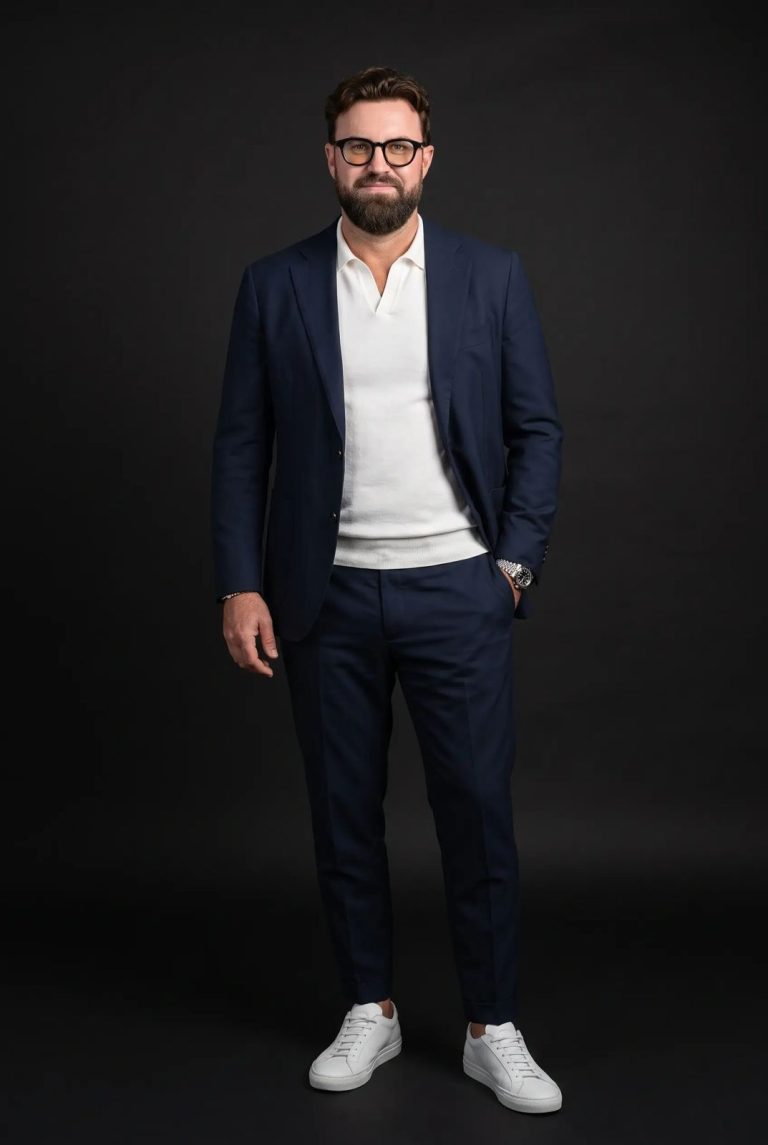
Media mogul, Sashin Govender believes understanding the difference between the two has become one of the defining business opportunities of the modern economy.
“Money follows attention,” says Govender, founder of Dubai headquartered media company CredibilityX. “But attention by itself is not enough. The real opportunity is understanding how to capture it, where to direct it and what you build once you have it.”
Music offers one of the clearest demonstrations of that principle. A song created in South Africa, Nigeria, or Zimbabwe can cross borders before the artist does. A dance can introduce a track to millions. A collaboration can unlock an entirely new market, while one extraordinary moment captured on a smartphone can move through global culture faster than a traditional marketing campaign could ever be planned.
What has changed is not simply the speed at which people can become known. It is who controls the machinery of attention.
For decades, artists relied heavily on record labels, radio stations, television networks, promoters and publications to reach mass audiences. Those institutions remain powerful, but they now coexist with another distribution system: the individual. An artist with a meaningful audience is no longer simply someone who creates music. They can become a media channel, a distribution network and ultimately the foundation upon which multiple businesses can be built.
Govender recognised that relationship early. He began deliberately building his own public profile at 18, later writing three bestselling books, speaking across six continents to cumulative audiences exceeding one million attendees and, in 2019, hosting Africa’s number one business podcast. In parallel, he built businesses under TMS Holdings, a portfolio which has generated more than one billion dollars in cumulative sales.
The experience gave him an unusual perspective on attention because he experienced it not only as a media metric, but as an entrepreneur. An audience could introduce an idea, an article could create authority, a stage could create relationships and a reputation could open a door before a sales conversation ever began. Over time, Govender stopped looking at attention as publicity and began seeing it as infrastructure.
That philosophy would become central to CredibilityX.
Rather than building another traditional public relations agency, Govender set out to create a media ecosystem capable of helping people and companies become visible across the places where modern reputations are formed. He says CredibilityX now works through relationships with more than 1,700 publication partners across 90 countries, supplies media inventory to more than 2,500 agencies and distributed more than 12,000 articles during 2025. Its work extends across media, reputation, search, social platforms, content and increasingly the information surfaced through artificial intelligence.
The scale matters because Govender believes great talent has never guaranteed great distribution.
There are extraordinary musicians nobody has heard yet, entrepreneurs building companies outside the spotlight and creators whose ideas deserve audiences considerably larger than the ones they currently reach. Talent can create something remarkable, but if nobody discovers it, understands it or remembers who created it, much of its potential remains unrealised.
CredibilityX operates in that gap between having something worth knowing and becoming known for it.
For an emerging artist, that might mean ensuring the story behind the music travels alongside the music itself. For an established performer, it could mean expanding a name beyond entertainment into fashion, hospitality, technology or investment. For an athlete, it may mean building an identity capable of surviving the final game. For an entrepreneur, it could mean making years of achievement visible to the investors, customers and partners who have never entered the same room.
The principle is the same: attention creates possibility, but direction determines what that possibility becomes.
Some of the world’s most recognisable entertainers have demonstrated what happens when the two converge. Rihanna’s identity expanded beyond music into beauty through Fenty. Jay Z built a business and investment identity alongside his career in music. A newer generation of creators has gone further still, building products and companies with audiences already waiting for them.
Africa is increasingly producing its own generation of artists and creators with the cultural reach to think just as expansively. Music originating on the continent is travelling internationally, African fashion and creativity are entering global conversations, and the opportunity is no longer simply to export culture. It is to retain more of the economic value created when that culture captures the world’s attention.
That requires thinking beyond followers.
Govender argues that a million people briefly watching something can be less valuable than one hundred thousand people willing to act. A viral moment that disappears tomorrow is different from an audience that remains for a decade. Streams, views and followers measure reach, but they do not necessarily measure the strength of the relationship behind it.
The more valuable question becomes: What are you building while everyone is watching?
That could be intellectual property, a community, a company, a consumer brand, equity, an experience or simply a reputation strong enough to carry an individual into whatever they choose to build next. Once viewed through that lens, personal brand stops being vanity and becomes distribution.
The challenge is that modern attention is fragmented. Someone may discover an artist through TikTok, research them through Google, encounter an interview in a publication and eventually ask an AI platform to explain who they are. Every one of those moments contributes to an impression, which means building influence today requires more than dominating a single platform.
That is the world CredibilityX has positioned itself around: connecting media, search, reputation, content and digital visibility so that when attention arrives, there is an ecosystem capable of supporting it.
Govender’s thesis is ultimately optimistic. The world is filled with people carrying extraordinary ambitions that remain larger than their current audiences. Technology has reduced the distance between an idea and the people who might believe in it, but someone still has to bridge that distance.
Talent creates the possibility. Ambition creates the dream. Distribution allows the world to discover it.
And in an economy where almost everyone is competing to be seen, the people who learn how to capture attention and turn it into something they own may be building one of the most valuable currencies of all.