DJ Obi always knew that he was going to work in entertainment. One way or the other, he was certain that he was destined to work at the forefront of social life, even if wasn’t always certain what aspect of the industry he would operate in. It helped that his father was Dr Levi Ajuonuma, a respected Nigerian broadcaster and journalist, who introduced him to the field and sparked his childhood curiosity. “Growing up around my dad, I’d been introduced to the media and entertainment world through his lens,” DJ Obi tells Billboard Africa a Zoom call. “I was watching him meet interesting personalities of that time, and saw how blessed and lucky he was to have access to those kinds of people. It just felt like something I wanted to get into.”
As a child, he sang in his local choir but he remembers being totally enthralled at witnessing the effect that legendary Nigerian disc jockey, DJ Jimmy Jatt, had on his audience at parties and events. “I saw the crowd reaction to him DJ-ing and seeing how he flipped songs back and forth; it almost felt like controlling people’s emotions,” he says. “It made me want to learn how to play music like that.” Coming of age in the late 1990s and early 2000s, he was also fascinated by a wide range of American disc jockeys, taking influences from the likes of DJ Jazzy Jeff, the late DJ AM, and DJ Prostyle. “As a young man, I used to watch all their YouTube videos and pay attention to anything they were doing musically,” he recounts.
Despite soaking in all these influences, DJ Obi (born Obinna Levi Ajuonuma) didn’t actively start DJ-ing until 2005 when he was studying for a degree in media, broadcasting and communications at Worcester State University in Massachusetts. He performed his first DJ set for the birthday party of the sister of a romantic interest, hoping to impress her but the reception left a mark on him, encouraging him to forge a professional career in DJ-ing. He gradually built a reputation as a respected DJ, eventually returning to Nigeria in 2012.
A Return to His Roots
For DJ Obi, there was never a chance that he wouldn’t return to Nigeria. “Going to America, I always knew I was coming back because Nigeria is home, and home is where my heart is,” he explains. “In fact, part of the reason why I wanted to go and explore the world and do all these other things was so that I could bring it back to Nigeria and do it for my own people. I’ve always been a firm believer in going to acquire whatever was making other places look shiny, and bringing it back home so that people don’t have to break their banks to go outside Nigeria for those experiences.”
Upon returning to Nigeria, DJ Obi initially struggled to get bookings as clubs and event organisers were offered trial slots or claimed not to know him. In 2016, he devised a clever way to solve the issue of name recognition, breaking the world record for the longest DJ set. The previous record holder was Polish disc jockey, DJ Norberto Loco, who set the record in Dublin, Ireland, spinning for 200 hours in June 2015. DJ Obi broke the record just a year later in Lagos, Nigeria, completing a 240-hour marathon that instantly elevated his profile and made him one of Nigeria’s most popular DJs. Even now, nine years later, he still speaks about the feat as an important part of his career. “It still does the PR work that I set out for it to do,” he says. “It still comes up online, and people still recognise the work.”
The Birth of Obi’s House
Much like everyone, DJ Obi’s life profoundly changed in the wake of the 2020 COVID-19 pandemic. With the government instituting a lockdown in Nigeria, parties and events that constituted an important stream of income were shut down, necessitating a pivot to social media as his audience became virtual. “It started in my house online as I was trying to do the IG Live thing that everyone was doing to stay connected,” he explains with a grin. “I was the first one to do something like that in the Nigerian DJ-ing space. We started pushing it based on the fact that I was DJ-ing in my house and called it Obi’s House.”
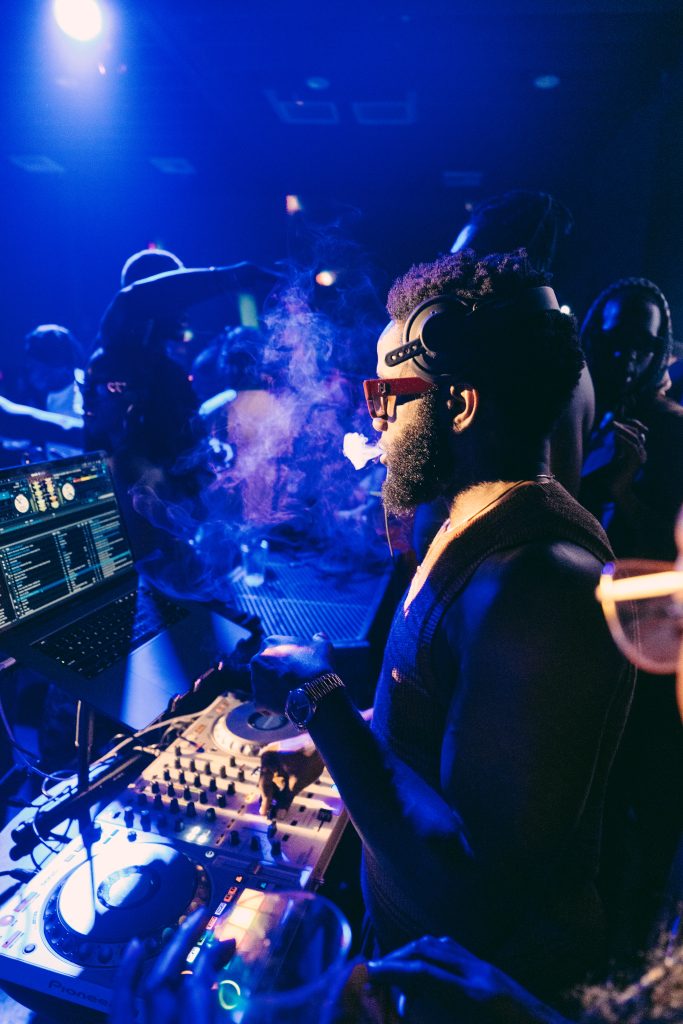
When government restrictions were lifted, DJ Obi brought Obi’s House to Bolivar Lagos, an upscale bar and restaurant in Lekki, a residential area in Lagos. “When it was time to be back outside, it felt like the right thing to do,” he explains. “The vision also came about from prayers and talking to God about what the next thing in my life should be after experiencing lockdown for months.” The idea of hosting a party on Monday was groundbreaking in a city that traditionally favours weekend hangouts and soirees.
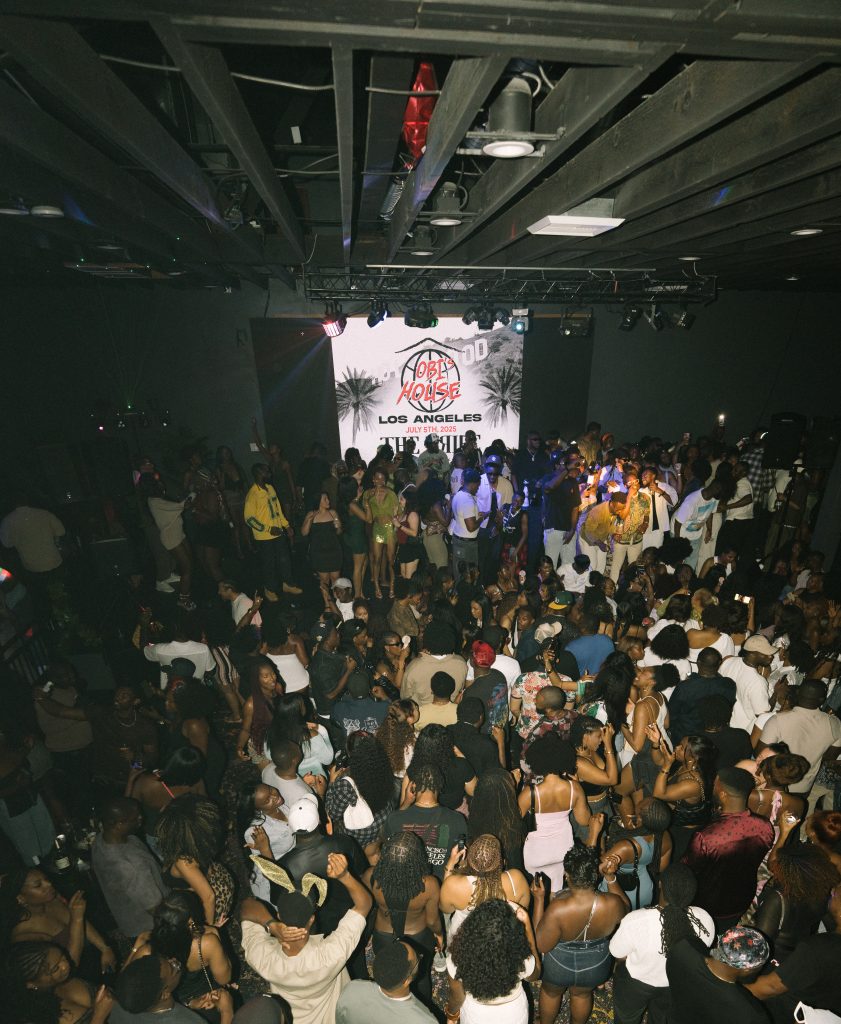
For DJ Obi, the distinguishing factor of Obi’s House was the sense of camaraderie that the party evoked. “A core thing for us is for people to just be able to have a good time; we want them to come as strangers and leave as friends,” he explained. “Sometimes, in Nigerian social contexts, we can be standoffish, but we try to get people out of that at Obi’s House. When people come to Obi’s House, it’s just a very relaxed atmosphere; there’s no pressure to show off, which is something we see a lot of in many Nigerian parties. It’s those little things that make people comfortable to come and party with us.”
In a little over four years, he has built a party that’s now regarded as Nigeria’s premier weekday social event, providing a bridge for music lovers, musicians, and socialites to interact as regular patrons. Sadly, the exponential growth of Obi’s House necessitated a move from Bolivar Lagos to Hard Rock Cafe in Victoria Island. Importantly, Obi’s House has helped spotlight some of the hottest DJs in Nigeria, providing a platform that has catapulted DJs like Dope Ceasar, DJ Shawn, and DJ Burna to fame. “We’ve been able to highlight a lot of DJs that live in Nigeria and do their thing,” he says. “A lot of DJs have now recognised that they are forces to be reckoned with because they are the life of the parties. That knowledge has sparked a new wave of entrepreneurial DJs who are now hosting their own events and making their money.”
From Lagos to the World
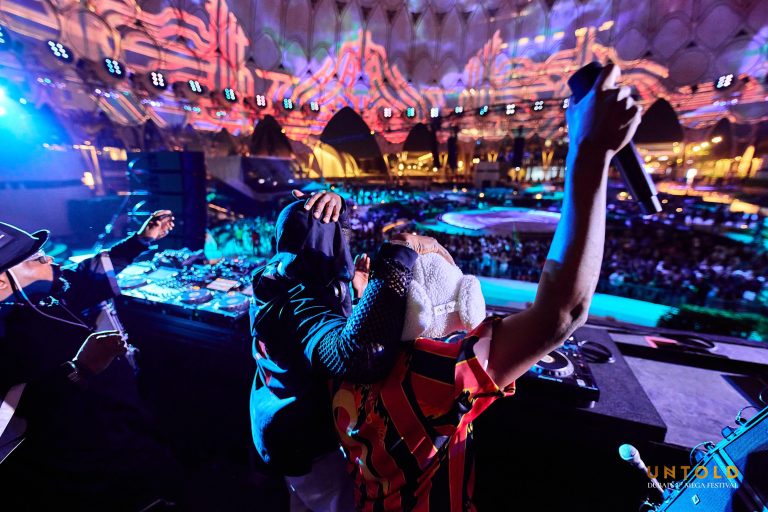
When we speak, DJ Obi is in New York for a stop on the Obi’s House global tour, further proof of the party’s global reach and the continuing appeal of Afropop in the West. He says that the decision on where to go is determined by demand. “We go where people want to experience the Obi’s House experience,” he says. “The communities love Afrobeats and follow what we do and follow our videos on YouTube.” While Nigerians are the primary audience, he envisions Obi’s House as a platform to bring Africans together in the diaspora: “The way Obi’s House is regarded is as a complete Afrobeats party package anywhere in the world. It’s a dope platform to bring Africans together anywhere in the world. So, when Obi’s House is in the city, it’s a great time to reconnect.”
View this post on Instagram
As a critical part of the Nigerian music ecosystem, DJ Obi is invested in elevating the level of the music coming out of the country, regularly collaborating with artists on songs. He says that those releases are typically born of long-term relationships and friendships. “Most of the people I make music with are people that I respect and cherish,” he says. “I don’t approach it like the typical artist-DJ collabs. It’s more like two friends who have been friends just coming together to make music. We get into the studio off of that energy and translate what our friendship and relationship is like in the music that we put out.” Songs like “Patek” with Timaya and “Take Me Away” with Bien and Ayande hint at the depth of the relationships that birthed them.
With the ember months fast approaching and peak party season in Nigeria on the horizon, DJ Obi is working on songs that match the energy of West Africa’s famous Detty December. “Going into the festive season, we are looking at danceable, upbeat music that’s dancefloor-ready,” he shares. “That’s the direction we are going towards and we are thinking of people like Telz, Young Jonn, and other people who are hot and popping right now.” It all ties back to his goal of making Obi’s House the nexus of live entertainment in Lagos, the heart of Afropop. “We want the songs we make to create a soundtrack that services Obi’s House because it all comes back to Obi’s House.”
For all the success achieved, DJ Obi remains fiercely ambitious, setting his eyes on creating a brand that’s an unavoidable part of the Lagos party culture while retaining the charm that makes it a stop for music lovers across social class and divides. “I try to stay humble because I see the growth, but I feel like there’s still more that we can do,” he says. “I want us to become that staple festival that people come over to Nigeria for during festive periods. We also want to be able to take that festival experience everywhere to showcase what Nigeria can offer the rest of the world through music and culture.”