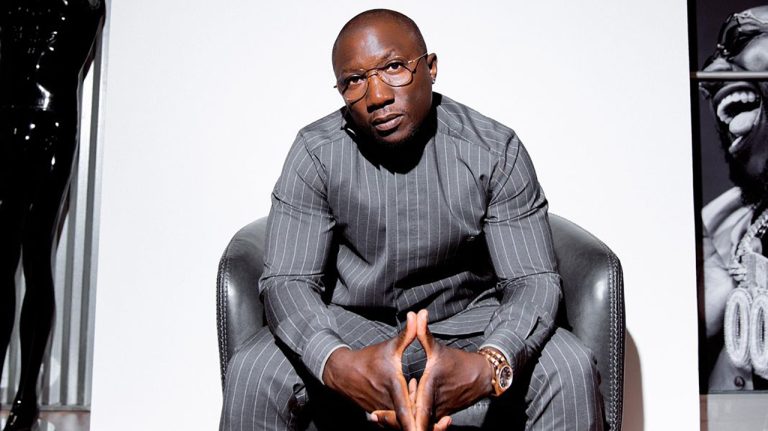
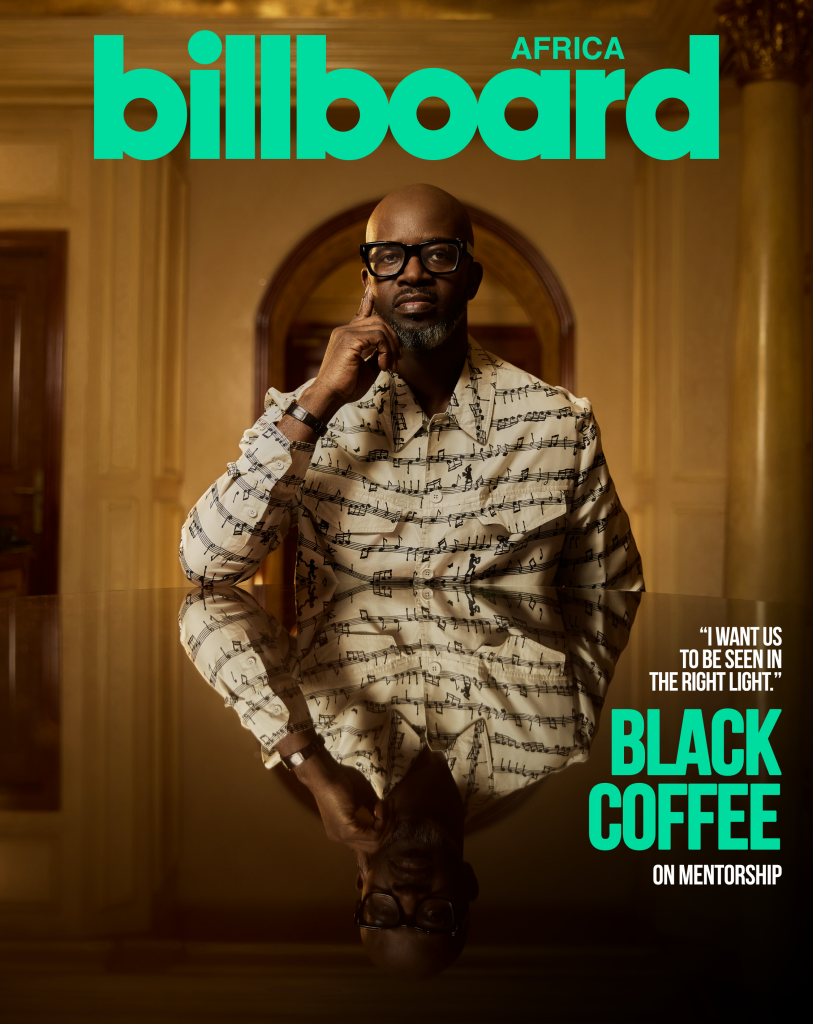
From South African clubs to international festivals and stages, and with a discography that spans a kaleidoscope of genres and collaborators, South African DJ, producer and entrepreneur Black Coffee has cemented his place as a driving force in the global electronic music scene – and an ambassador of African creativity.
And he’s no stranger to global chart success. Drake’s “Get It Together” featuring Jorja Smith and Black Coffee (a remake of Black Coffee’s 2007 track, “Superman”) peaked at No. 25 on Billboard US’s Hot R&B/Hip-Hop Songs chart; No. 9 on Hot R&B Songs, and No. 45 on Billboard’s Hot 100 in 2017.
The David Guetta collab “Drive” featuring Delilah Montagu reached No. 31 on Hot Dance/Electronic Songs in 2018, and the Diplo collab “Never Gonna Forget” featuring Elderbrook – lifted off the Grammy-winning 2021 album Subconsciously – reached No. 19 on the Hot Dance/Electronic Songs chart in 2021. The album itself reached No. 25 on Top Dance & Electronic Albums in 2021.
In 2022, Black Coffee became the first African artist to win the Grammy for Best Dance/Electronic Album, for his album, Subconsciously, on which he weaved his way out of traditional expectations of a dance and electronic artist – and even those of an African artist – into a space driven by melody. He also made history as the first South African to host a sold-out performance at New York’s iconic Madison Square Garden in 2023.
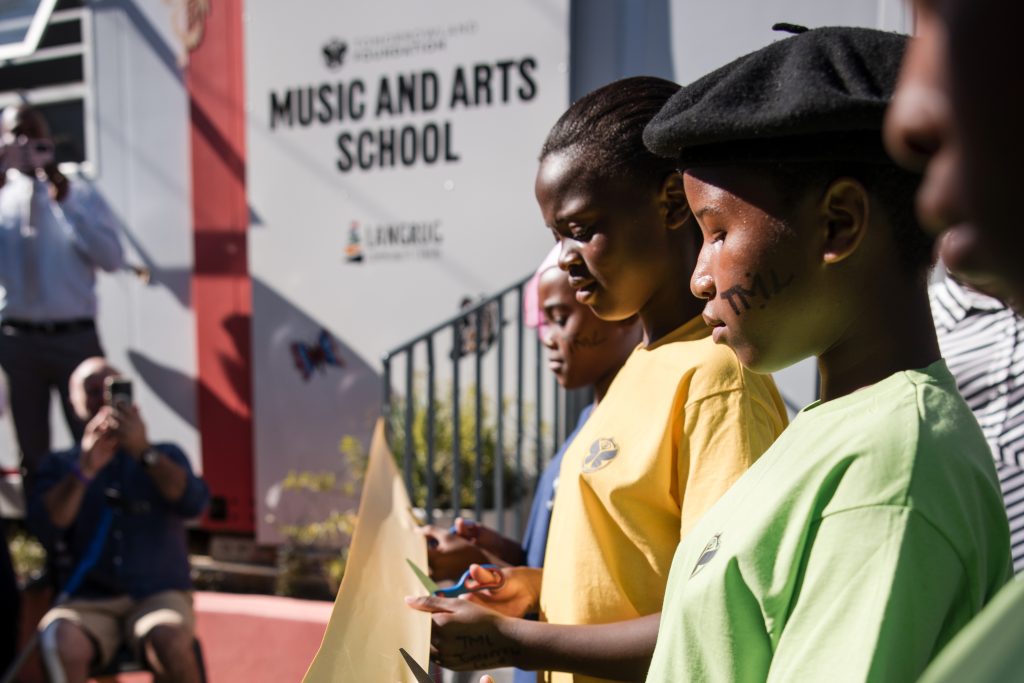
No matter the international heights he continues to reach, the artist born Nkosinathi Maphumulo remains passionate about investing in his homeland. In 2010, he created the Black Coffee Foundation to uplift the people of South Africa by providing for their needs in a sustainable manner that promotes education, independence and social integration. And through the music festival series, Africa Is Not A Jungle, he aims to challenge and transform how the the continent’s stars are seen and celebrated, both at home and abroad.
Ahead of his Africa Is Not A Jungle showcase in Johannesburg, and after honouring him with Billboard Africa’s inaugural African Power Player of the Year award, we spoke to Black Coffee about his role as an ambassador for African music, his approach to creativity, and his hopes for the next generation.
Billboard Africa: You’ve just finished one Africa Is Not A Jungle show in Durban, and you’ve got another one coming up in Johannesburg. What’s it like to bring that experience to life on home soil?
Black Coffee: It’s amazing, especially this time around because we are linking the event with the Black Coffee Foundation work. The one that’s upcoming now is in Melrose Arch; we basically have created an Africa Is Not A Jungle stage in a Black Coffee Foundation event, and we continue to raise funds for the foundation so that we can continue do the work of assisting South Africans that need the help.
Let’s unpack that name – Africa is Not A Jungle – because it makes sense to people on the continent, but I imagine it’s perhaps inspired by the idea of educating the rest of the world about contemporary Africa.
It’s basically there to help us be seen in the right light. Today, if you were to Google Africa, the images that you’ll see about the continent are not real images. I’m not saying that every country is out of the dog house; I’m not saying we’re all fine – I’m just saying that we are a continent that is growing, that is positive, that is driven, that is talented, that is all the positive things. And creating an event like that with such a statement as its title is part of the conversation for me. I thought it was important to not beat around the bush about what I was trying to do first, as an event. And secondly, as far as talent is concerned, everyone knows the most talented people in the world are from here – I don’t care what the sector is – but mostly in music, which is what that show is about. And it’s basically showcasing the best of what we have on the continent.
And my dream for it, which is something that we’ve done and I want us to continue doing it, is to tour it around Africa. So we’ve done Mozambique with the brand, we’ve taken it to Angola, but I want go out – I want to do it in Nigeria, I want to do it in Kenya, in Ghana. I want it to be an African thing where other Africans can kind of get on the bandwagon as well. It carries so much positivity and reassurance to us African people, who for many years, have lacked drive because of how we are seen by the world. But the idea is just to get this word out there.
I’ve also started another show called the Black Coffee Weekender in Cape Town, set for the last week of February. in February. We have Peggy Gou coming; we had WhoMadeWho on our first show last year. This is a new property that I’m doing in Cape Town. And my purpose with that one is to invite more international DJs to come play in South Africa, and to create some sort of tourism and a destination in February, because most European people are in winter and they need some sunshine.
You’ve become a sort of ambassador for African music, as you travel and as you perform and you represent the country and the continent. What’s been special about those experiences and getting the chance to fly an African flag in places that maybe haven’t experienced the continent’s sounds before?
I think when I started traveling, I didn’t think it was a bigger thing for the continent. It was just me personally being a young, driven man who had so many dreams and goals, and [who wanted to] achieve more in life and push all the boundaries just for myself. And over the years, I’ve realised that I carry so many dreams with me. I carry so many African children’s dreams – kids who never even thought they would leave the township, let alone the city they were born in, let alone the country. And being someone who was born and grew up in the same way most African kids grew up, [I was focusing on] being able to push all the boundaries, and not feel any kind of pity for myself as an African, and just focusing on growing.
Then I realised that it’s bigger than me – and it’s a lot of work; it’s a lot of pressure, because I’m human at the end of the day, and what it means is then my life becomes a life that is [under] a microscope, and all the mistakes that I make, I make them publicly, which is the toughest thing you can experience as a human being. We all are growing as people, and what makes us grow even more, and better, is mistakes. You make mistakes, and you grow, and you walk, and you fall, and you get up. But it’s hard when everyone is watching, and everyone has an opinion and everyone has a comment about your life.
So in the end, it has become such a bigger burden – and I don’t mean that in a negative way. It has become a bigger weight to carry because, there’s so many people who are watching, and who are inspired, and who want to come walk the journey. And today the grown-up me is grateful for actually being able to walk the journey that I’ve worked, and to have failed the way I failed, and stumbled. It’s a true reflection of how one can grow, and it’s raw, and it’s pure and, you can see it. Some people try to sugarcoat their lives and make their lives perfect, and you know, they’re untouchable. They don’t fail. And I’ve failed in public; I’ve won in public. I’ve failed so many times in public, and I’m at a space now as an adult where I see that as a blessing. So yeah, it’s been such a journey to be seen by Africa as someone who’s carrying our culture forward.
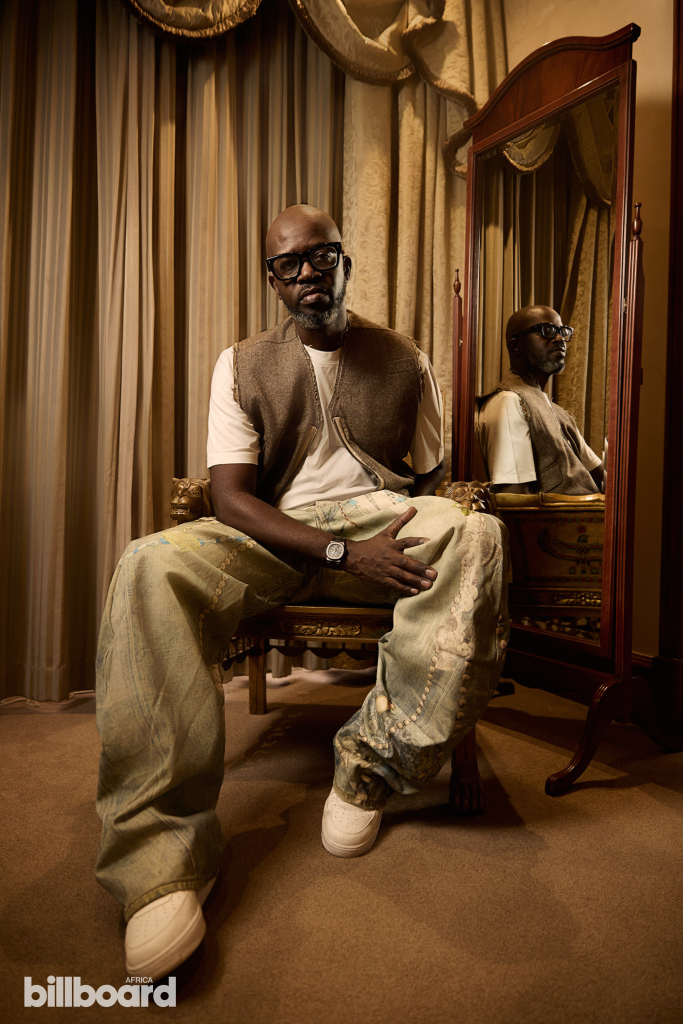
What do you think the world gets right about Africans – and what do you think they get wrong?
I think everyone who’s been here, and everyone that I’ve met, speaks about how warm South Africans are. We are very warm people. I haven’t seen anyone who’s negative about South Africa. It’s one of the places that really has potential in to be really, really great, given the right resources. I just think South Africans are tough on South Africans. I think South Africans are really tough on each other. And as someone who’s an artist here, I’ve seen it firsthand. They love you so much, and the same love that they give you can turn into hate, and they’re going to give you the same hate equally. But I credit our past, I credit the families that raised us because of our past. I credit how we grew up, our environment —very few people grew up in more positive environments, and it’s something that’s very hard to shake off.
Your 2021 album Subconsciously earned you a Grammy. Since then, have you felt any pressure to channel your sound in any particular way?
Subconsciously was a specific album where I was pushing some boundaries for myself, and [exploring] the different genres of music that I put on the album. They were very specific to what I wanted to achieve, because my previous albums were house music albums, and for the first time I just wanted to push myself and create different tempos, to work with different people and work with some of the most prolific and giants of music. That album really, really pushed boundaries for me. I have the likes of Usher, David Guetta and Pharrell, amongst many other artists, on the album.
These are people that I dreamt of working with, coming from where I come from, and so it was very specific — and I don’t think it’s something that I want to do again. I have that thing also about music: I don’t like staying in a loop. If I put all my energy into something like doing Moses Mabhida concert [2011’s “Africa Rising” showcase, where he performed with a 24-piece orchestra], when it’s done, it’s done. I don’t have to go back again and redo it. It’s done; I’ve ticked the box. If I’m going to sell out Madison Square Garden, I will do it. Once it’s done, it’s done. I announced that I’m doing the O2 in London, which I’m looking forward to, but when it’s done, it’s done. I don’t have to keep on repeating the same way I’ve been doing albums. I just feel like my journey is my journey, because it evolves and as an artist, I don’t have to explain myself to many people – even though some get confused. And those who understand me, or who’ve been following me for years, I think they get it. I keep moving. I don’t have to keep repeating the formula that works, or whatever makes other people happy. I’m very true to myself and to my voice.
View this post on Instagram
With that in mind, how would you describe your sound today?
I don’t think I have description. I don’t have description for anything. I don’t have description for the kind of art that I like collecting. I don’t have description for the kind of clothes that I wear. I don’t have specific colours on things. I am just someone who’s really open to learn. I’m always a student; I’m always learning. I’m always trying to figure out how to excel, and I don’t think you can if you’re too comfortable, or if you lock yourself up in a genre or in a style. So I don’t think I have one. Even with stuff that I’ve done and the remixes that I’ve done for other people – I think the last remix that I did now was for [Snoh Aalegra’s] “DO 4 LOVE” remix, which is a totally different genre of music. I listen to the voice, I listen to the music, and I follow. I don’t have to try to fit a “Black Coffee sound.” So I try not to stay in that space where I am describing myself in a certain way – it wouldn’t have the freedom that I want.
As a scholar of sound, what excites you about African music today?
What excites me about African music is the fact that we haven’t even started showing the world what we have. Even South Africa alone, with so many different cultures. And it’s not even about the language, it’s just the approach in the sound and the rhythms, and how each culture approaches melody, and a song and creativity – how we approach everything; how we approach dance. We just have so much that we haven’t even shown the world. That’s what excites me. We are one continent that really has a gift, and it’s a gift that’s always going to keep giving. As someone who travels and who’s been everywhere, I’ve seen many things in music, and I’ve seen how almost other parts of the world have reached a ceiling culturally, as far as their music is concerned. And I think about our continent, and I think about our country specifically, and about how we haven’t even started exploring our music. It excites me very much. We have so much to show the world.
It’s been 10 years since the release of your Monique Bingham collaboration, “Deep in the Bottom (of Africa),” and the album of the same name, and this year you’ve released a new version of that project with remixes. How did the original song came about – and what’s it been like to give it new life today?
“Deep in the Bottom (Of Africa)” is one of the most beautiful projects that I’ve ever done. And people don’t know this: I am featured on the song – Monique Bingham is the one who approached me to do the song, and we had always talked about working [together]. She started with the production of the song, and I co-produced what she had started doing.. People don’t even know that on the original, she sings and she plays bass on the song, which is why you see that in the music video. So the song itself came from her; it was her brainchild. She wanted to do this thing for a long time, and I’d always wanted to work with her.
Back in the day when I started collecting records, she was one of the people I really, really looked up to. She used to sing with a band called Abstract Truth, and I was always blown away by her approach. She was always my idol in house music. And when I finally met her back in the day, I told her, “One day, I’d love to work.” Even though it’s known as a Black Coffee song everywhere around the world, it’s really a Monique Bingham song featuring Black Coffee. So even with this remix project [2025’s Deep In The Bottom (Of Africa) The Remixes (Pt. 1)], she’s the one who’s been a pioneer of it. She went and chose the people to remix it. She’s one of the people I highly, highly respect in the music industry, and one of the people I would like to do more work with, even beyond just making songs – in just the music space, and teaching, because I feel like she has so much to offer.
What is your hope for the next generation of African superstars?
The reason I’m mentioning teaching is because I just feel like we have such an informal industry. Those who have been walking this journey at this point, there should be journals that are written for any kid who wants to be an artist, where they could read this book on how to start, or what are the right and wrong things to do. Most importantly, what destroys artists is mental health. And not because you are not ready, or you are not mentally fit, but because fame itself changes who you are. Fame is just a different thing. You could come from a good family; you could come from a very humble family – but the minute you start receiving that power [it changes you]. And I just feel like in whatever we do in creating stars, that should always be the goal: to first make sure that mentally, everyone is fit. I watch so many [tragic] stories locally – and things wouldn’t happen if we had platforms with information about how to carry yourself, or if there were a place to go to while you’re growing, and while and you’re becoming famous. I feel like that’s missing, and it’s something that I speak about a lot to all the kids that are starting to make a wave. Don’t forget your mental health; it’s such an important thing.
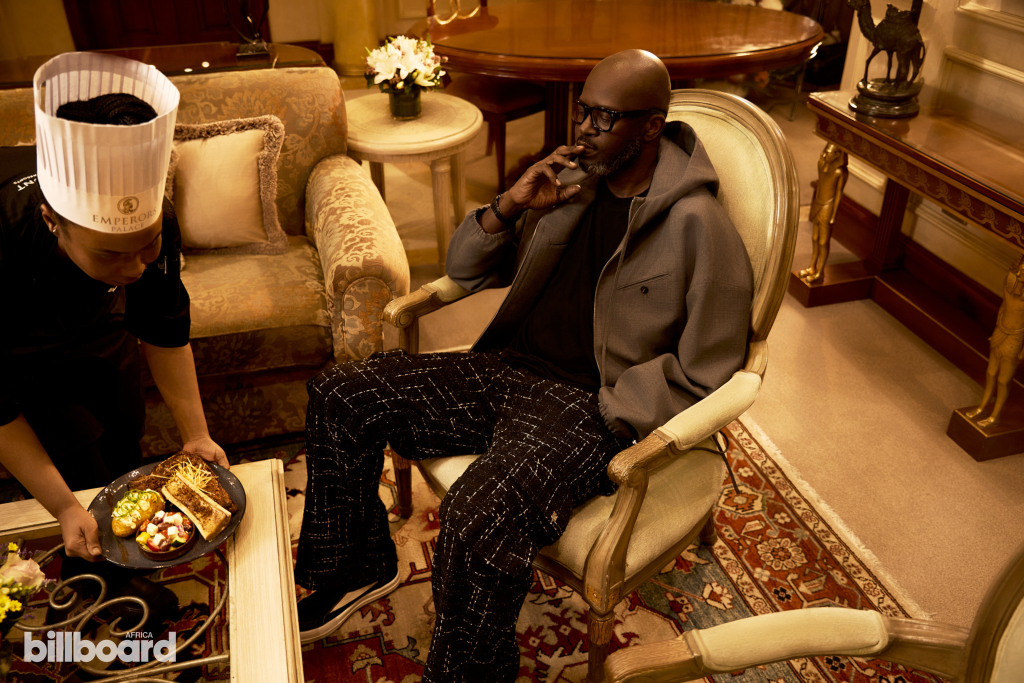
Throughout your career, what’s probably the biggest lesson you’ve learned – and what advice would you give someone looking to follow your path?
When it comes to your art? Follow your heart. When I started doing my first album, I was alone. I literally made music on my headphones – I didn’t have a studio. Everything that I created, I was creating it on my own. Yes, I played it too friends, but I needed no one for approval for the music that I made. And I made an album and everyone loved it; it even received an award [the 2006 South African Music Award for Best Dance Album]. And then around my second album, people were telling me what to do – same with my third and my fourth, and even the one I won a Grammy for. I had people saying, “Nah, it’s not the one.” So what I would say is, as an artist, just listen to your voice – you’re an artist, because you have one. And don’t allow people to tell you how you should do your art. Do it the way that you receive it. It’s your gift. And don’t let fans become the artist. Remain an artist, and create what you are inspired to create.