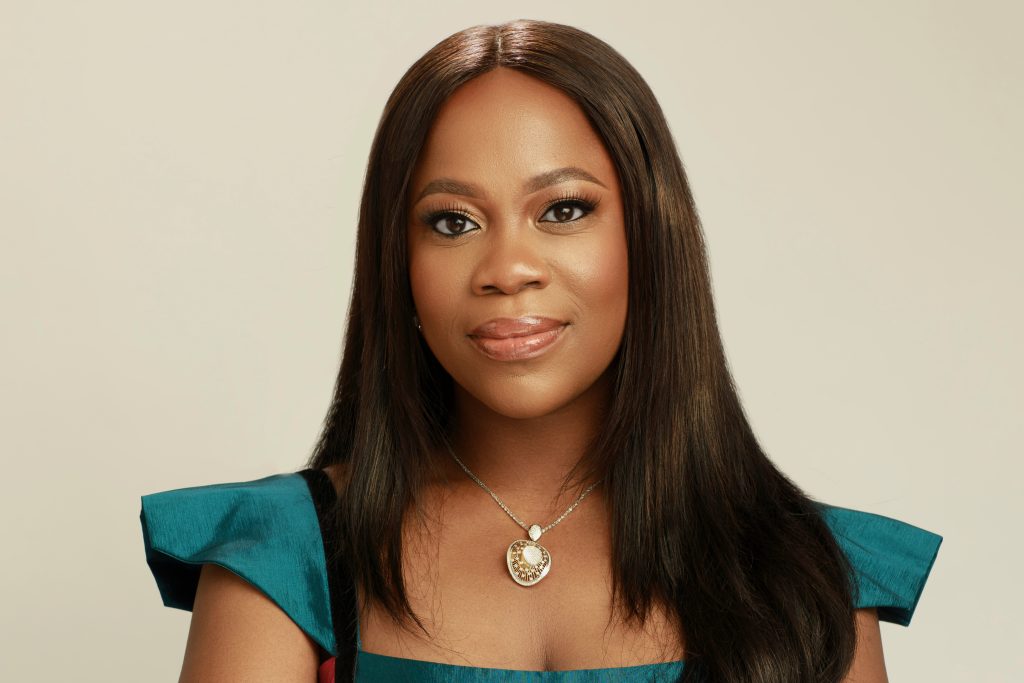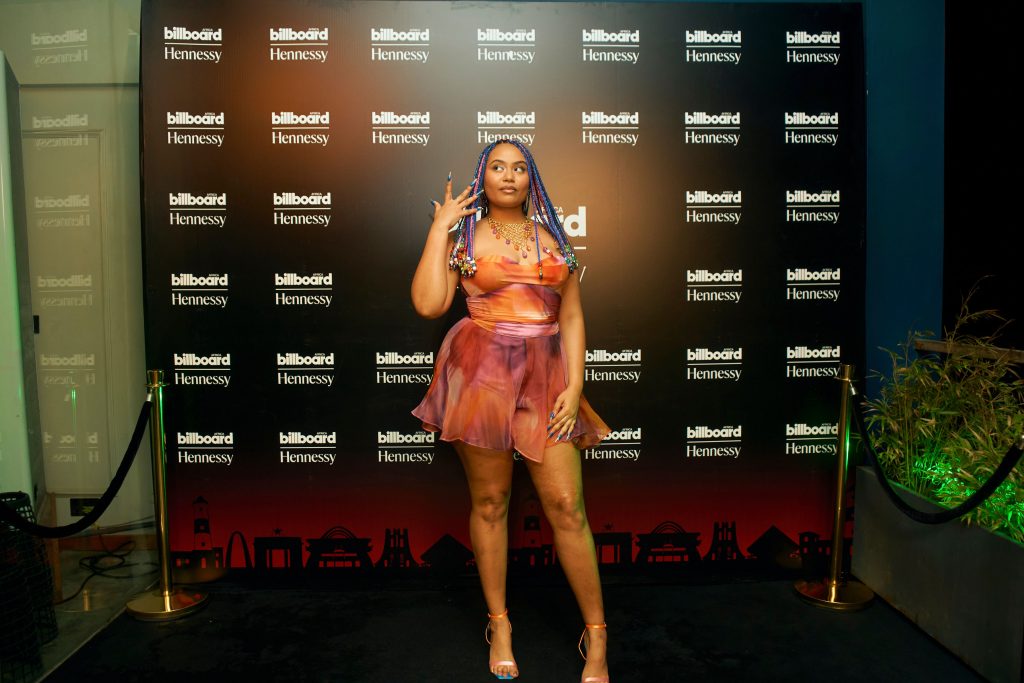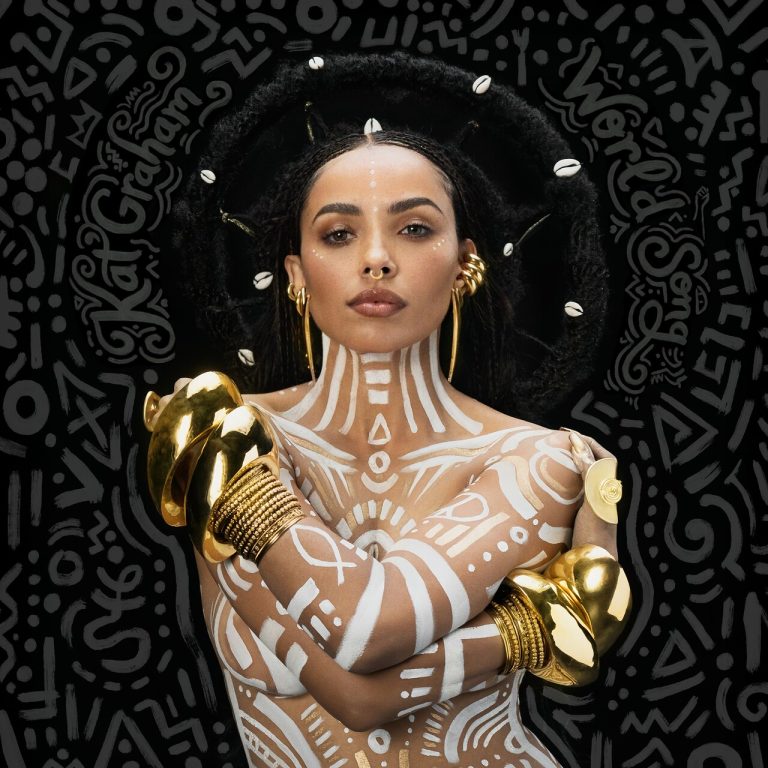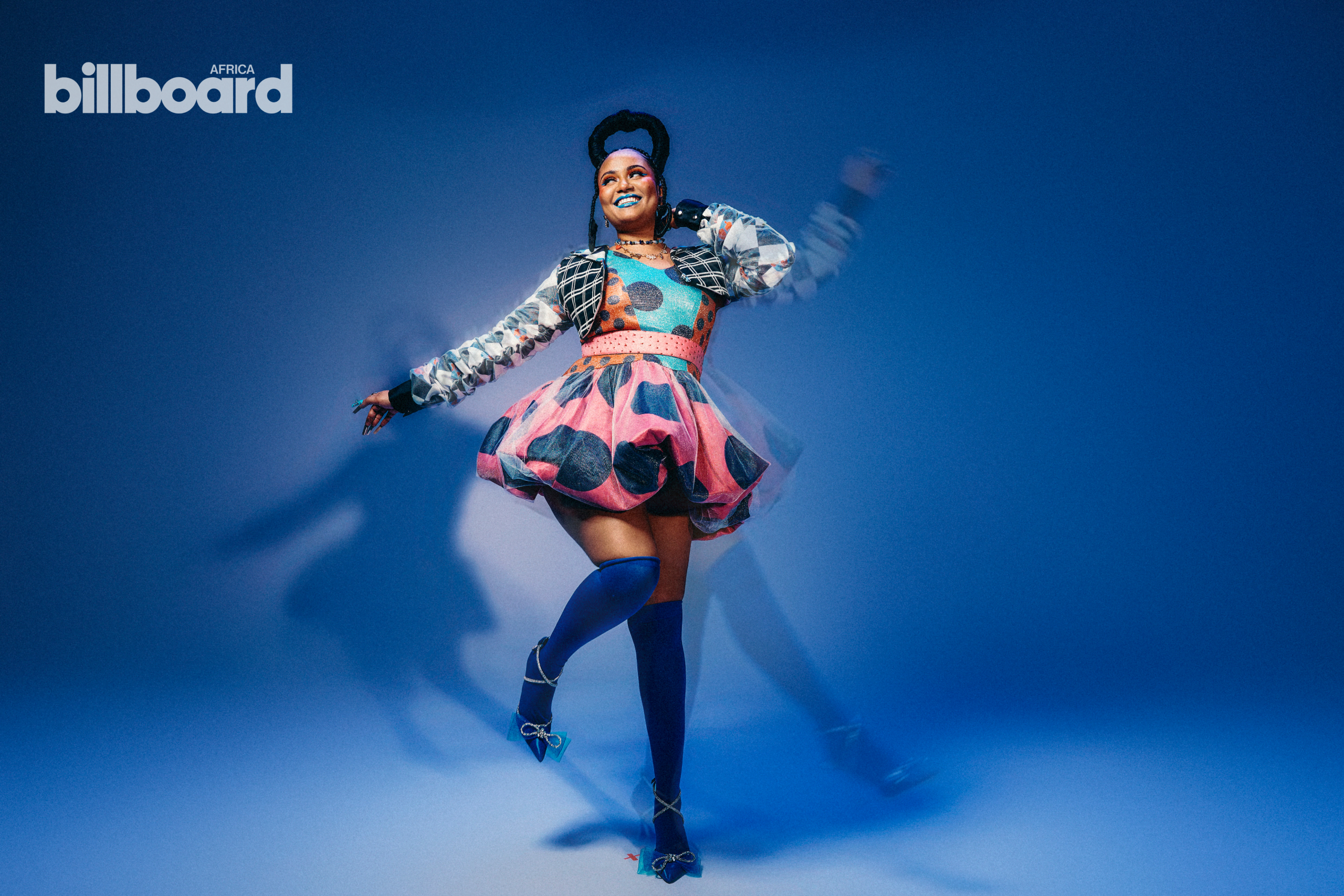
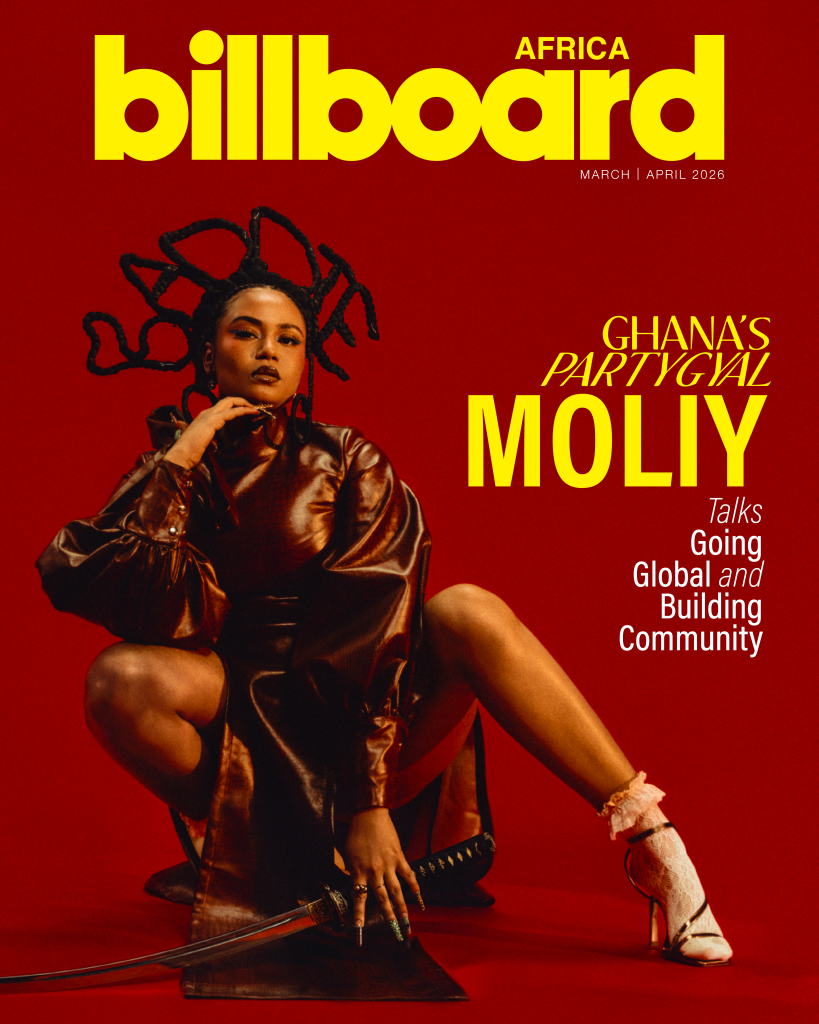
Since her debut in 2020, Ghanaian-American singer-songwriter MOLIY has become one of Africa’s most dynamic voices, blending Afropop, R&B, and dancehall with fearless flair. She garnered buzz in 2020 when she appeared on fellow Ghanaian artist Amaarae’s Afropop bop “SAD GIRLZ LUV MONEY.” The remix, featuring Kali Uchis, reached No. 80 on the Billboard Hot 100 the following year, and it hit No. 28 on Rhythmic Airplay.
Her viral 2024 hit “Shake It To The Max (FLY)” became a worldwide sensation, and its remix featuring Skillibeng and Shenseea cemented her as a global breakout star — surpassing 1 billion streams and topping charts worldwide.
The record held no.1 on Billboard’s US Afrobeats Songs Chart for 22 consecutive weeks, appeared in Spotify’s Top 5 Songs of the Summer, was listed among TikTok’s Top 10 Global Songs of Summer 2025, and topped Billboard’s US Afrobeats Songs Year-End Chart for 2025.
MOLIY also made history as the first Ghanaian musician to perform at the BET Awards, where “Shake It To The Max – FLY [Remix]” earned nominations for Best Afrobeats and Song of the Summer at the MTV VMAs 2025. She followed that momentum with a string of singles, including 2025’s “Backie” and the Tyla collab, “Body Go,” and keeps the vibes going in 2026 with the bees & honey collab, “PARTYGYAL.”
Raised in an Accra household where the sounds of Céline Dion, Michael Jackson and Whitney Houston would filter over from the restaurant her mother owned next door, the dynamic singer-songwriter born Molly Ama Montgomery listened to Rihanna, Beyoncé, Missy Elliott and Keri Hilson as well as Ghanaian acts like Itz Tiffany, Sister Deborah and MzBel.
Here, in an exclusive interview with Billboard Africa, MOLIY reflects on her stratospheric 2025, how social media helped her build a community, how fusing genres helped her find connections between cultures, and how she believes women can continue to grow the African music scene.
Billboard Africa: You had so many highlights in 2025 – what moments stick out as your absolute favourites?
MOLIY: I feel like the first one would be my experience in Jamaica, shooting the [“Shake It To The Max (FLY)”] remix music video, meeting Jamaicans, experiencing the country, and the kind of love that they showed me. That was incredible. That was really amazing. I could never have imagined. I think it’s just my first time being really received by another culture. And just taking it in, that was really something.
I think the second one was actually quite recently just being at the first Capital Jingle Bell Ball show in London at the O2 [6 December 2025], because I’d never even been in that venue. And I’m seeing all the artists on the lineup, and backstage during rehearsals, I’m like, “Yo, this is really real.” And not a lot of people, even artists who have had success coming from Africa, don’t have access to this opportunity. So it was a very grounding moment for me. I was just like, “Yo, just be present, just take this in.” And I just felt so much gratitude.
Did you ever feel pressure to make one kind of sound versus another, or to sound like some of the Ghanaian stars you grew up listening to, or seeing around you?
I think I definitely felt a pressure, because the consensus is to make it in is the Afrobeats scene. And I just felt like my sound was never exactly that. I have some understanding of my local dialect, which is Twi, but I’ve never felt comfortable enough to make music in it. And most of the popular artists that come from Ghana do sing in one of the dialects. And I also remember [feeling like] “Okay, no, you don’t even have to sound like a Ghanaian – now you have to sound like a Nigerian, because they’re the ones blowing up. They’re the ones really super global right now.”
So yeah, there’s always been that kind of pressure, but I don’t think I could have ever fully pulled it off, even if I tried, just because of my creation process. I don’t think it was possible. So I just constantly had to just do what came natural to me. And it wasn’t fun being ignored most of the time [laughs] – but I think I just loved the music so much, that it just kept me going.
How has your creative process evolved?
I think my process feels mainly the same, because I always start off with a really cool instrumental that I like, or maybe there’s a song that I’ve heard that’s really cool. Then I’ll just take it to a producer, like, “I feel like this sound is really cool, and I might want to create something like it.” It could be a beat pattern, or a tempo, or a melody style, or a genre. To me, melody is the most important part of the song, so that’s the way I mostly begin.
I think what has changed is the energy of a song or the kind of sounds that I’m willing to experiment in. Now it’s like, I don’t know, I take my inspirations a lot more seriously. If I’m out in the club and I hear something and it sounds crazy to me, I won’t hesitate. I’m like, “I think there’s something here that I think my voice can do on this type of sound.” So I’m way more decisive and in control of what I want to sound like. [In 2025] I told myself, if I’m in the studio and you’re playing a slow beat, turn it off. I don’t want to feel emotional. I’m not making music to fall in love. I’m not making heartbreak music. I knew exactly what I wasn’t going to do. Everything I want to do this year has to relate to having a good time, feeling uplifted, a fast tempo, an upbeat tempo. This is how I want to sound this year.” And I think you could definitely hear that in the different sounds that I’ve been experimenting with.
With that in mind, how would you describe your sound today?
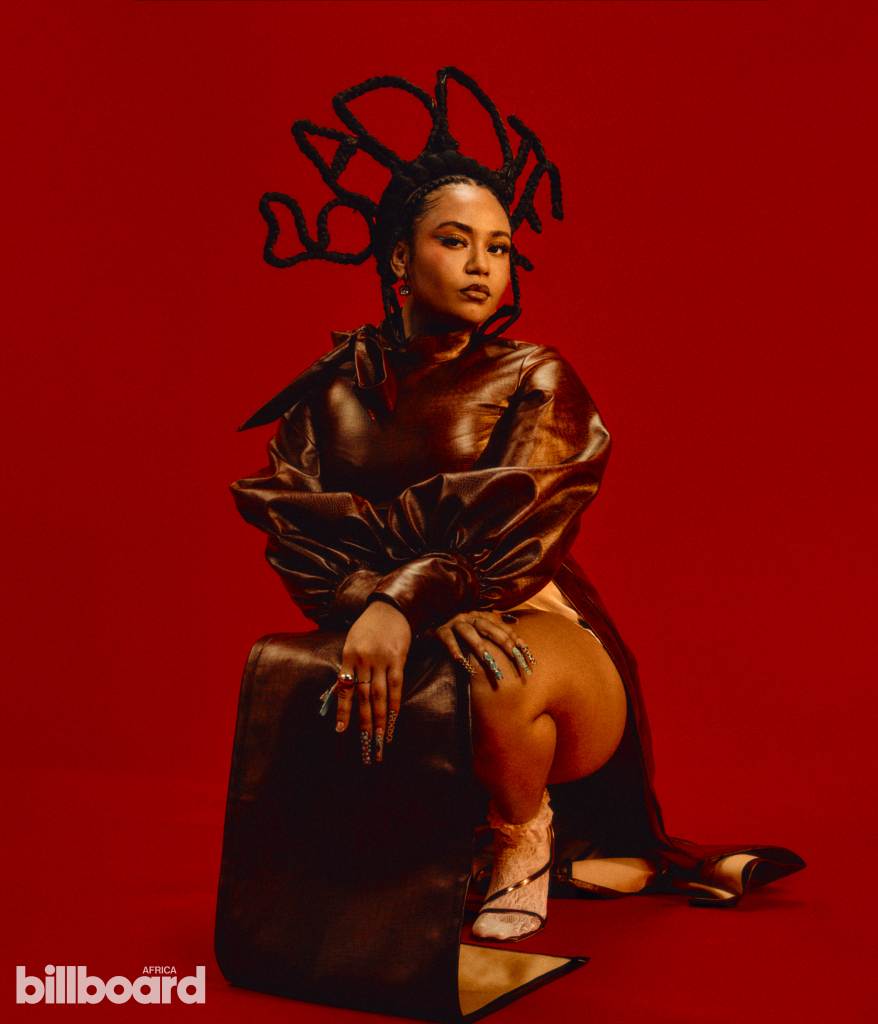
It’s very Caribbean influenced. I think I’m going for high-energy trance. I’m going from very danceable music. I’m going for music that you want to hear in festivals, that you want to hear in parties, that you want to hear when the groove is going on. If I had to put it in genre terms, it would be Afro-dancehall. When it comes to sound, I feel like Ghana has always been a big fan of reggae and dancehall music. I remember growing up and taking road trips with my friends and all we were listening to was Vybz Kartel, Massacre or Popcaan. [To then] actually meet these people in real life… I could feel the love back. Another thing that struck me physically being there was the resemblance of Ghana and even Jamaica and how it looks like physically — there’s not much that separates what it looks like or what it feels like. Obviously, there’s different cultures. Our accents are completely different. Even our charisma is different, because I think Jamaicans are a little wild and way more outgoing than Ghanaians can be, but it felt like meeting my long-lost cousins. It just felt like this could be a second home for me. When Vybz Kartel came out of prison and he launched the Freedom Concert at Jamaica, he had one of our biggest dancehall artists, Shatta Wale, on the lineup, and I just felt like that was incredible. And I just want to keep that kind of relationship alive.
Of course we have to talk about your 2024 single “Shake It To The Max (FLY)” and its incredible trajectory over the course of 2025. What were those early moments like for you when the song first started to go viral, and other musicians and stars dancing to the song on social media? Did you ever expect it to go as far as it has continued to go?
At the time when this all started, I was in Ghana. And I hadn’t dropped music for a long period of time, almost two years, and I was actually looking for support. I was looking for a way to be able to release music, even financial support, a distribution system or anything really to just take me to another level, because I had dropped music before. I had dropped projects before, and I felt like it had just bypassed. Nothing really came out of it. I would say it’s just been building my relationships in the industry with DSPs, getting more and more support each time. But in terms of just having an audience and having a community, I was kind of missing that.
And so at the time it really felt like, “At this point I don’t know what to do. I just need to release certain beliefs, certain limitations and just take what I have in my power, which is social media. So maybe I don’t have a budget right now, maybe there’s things that I’m lacking, but what I don’t lack is just the ability to pick up my phone and create.” And the fear of being ignored on social media or not being supported when you’re doing a rollout or just sharing your ideas with the world can be scary. But I’m like, “No, I’m not going to let this limit me anymore. I’m just going to do it irrespective or regardless, and I’m going to be consistent.” Because I have posted on social media before, but never have I been so consistent.
And I mean posting five times a day, every day, every single day, not missing. And I did that for months and months and months, and it just started growing, and growing, and growing. And it gave me a lot of confidence, honestly. And the fact that I found an online community that resonated with me and my sound, and I guess my quirkiness, was such a big relief. It was such a big relief. And the timing of it and everything falling into place is just like, I don’t know, it’s kind of crazy how it all happened, but it makes sense at the same time. It was unreal, to be honest. I could never have imagined the way that it played out and the amount of people involved and loving and feeding into the moment with me. It was like everyone was genuinely having fun.
View this post on Instagram
You channeled that momentum into “Body Go,” your collaboration with South African superstar Tyla. How did that one come together?
Well, I’m a fan of Tyla – I think she’s incredibly talented. She’s gorgeous and she’s doing things in a way that just I think it’s really inspiring. I feel like to young girls, I think she has a lot of ambition in what she’s trying to do, which I do as well. And I think even other amazing African female artists like Ayra Starr and Tems are even doing, I’m just like, “Yes, I’d love to see this, more of this.” And collaboration is so important to me. It’s been huge for me in my career. Collaborations have taken me places that even, I don’t know, I can’t even describe.
I think when two African absolute baddies are killing it and they get together, only incredible things can happen. So I’m really glad that this song came about. I created this song maybe two years ago [in 2023]. I was in the USA at the time, working with this producer called FRNCH, but I wasn’t releasing music at the time. I was just waiting, trying to see what could happen, how I could find a way to actually put out a project that makes noise. And so I was keeping it in the closet, waiting for the right time.
And along the way, FRNCH sends me this song, but this time it’s redone and it has amapiano elements. I’m like, “What is going on?” He’s like, “Well, I connected with this guy called DEE/MA and he levelled it up. He brought this vibe to it.” I’m like, “I think it sounds amazing.” So yeah, I guess this year as I was DM-ing with Tyla, and I sent her three different ideas.
To be honest with you, I’ve always been hesitant to try amapiano, because in my head I’m like, I love South Africans, I love their sound. I don’t want to come in like a culture vulture. I don’t want to disrespect the sound. It’s a huge thing for me. So I think the song being amapiano and having princess of amapiano herself on it, you couldn’t ask for a better way to enter the genre. South Africans love it and they have been showing so much love.
With your track record of collaborations with other African stars – such as Amaarae and Tyla – what is your hope for women in African music in particular?
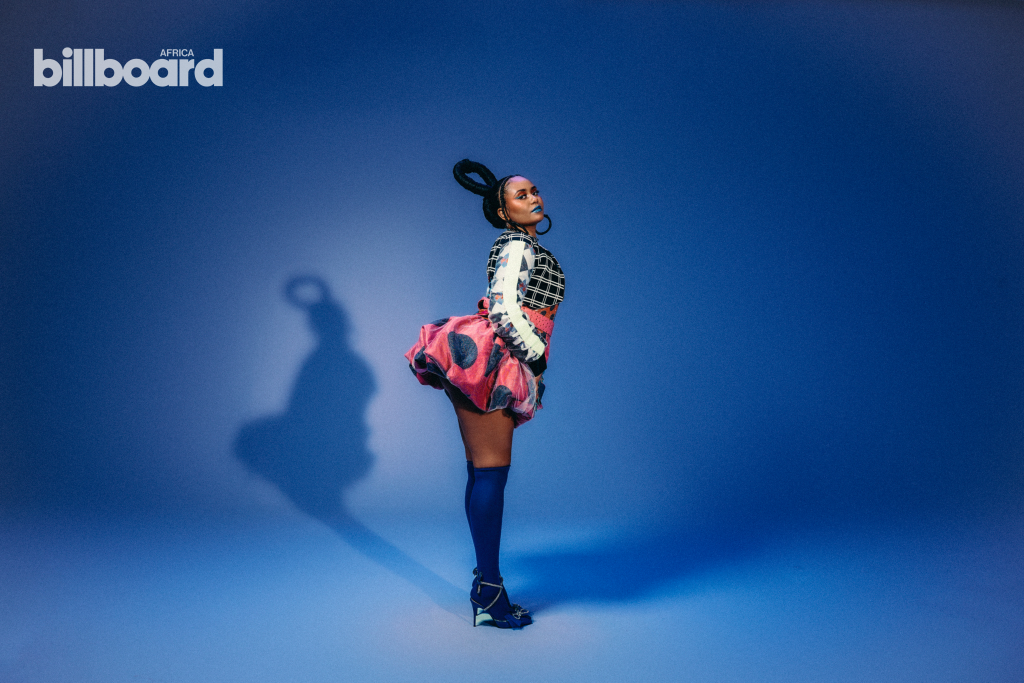
I hope we continue to uplift each other. I hope it’s less of competition and more of, “How do we support each other? How do we keep this going? How do we open doors for each other?” Because even in Africa, you always see this debate, “Oh, the big three, the big three,” and who are they mentioning? They’re mentioning all men. I’m like, “Hello, can we just look at the stats this year? Can we just take a peek and see actually who’s killing it?” And it’s not like it’s a competition, but I just feel like it should be balanced. So yeah, I just hope more and more women continue this in a way that just opens more doors, inspires more, creates more opportunity. I would love to see the A-list African women doing a tour together, or creating a project together, or even creating an initiative together that helps younger artists. I think it’s a possibility and it could be really great.
As someone who grew up listening to all kinds of sounds from across the world, and now having your own experience of touring and performing abroad, what is something you want the world to know about African music and African musicians? What do you think the world gets right – and wrong – about Africa today?
I feel like a lot of African artists are super unique in the way that they create. I think just everybody being grouped as Afrobeats is interesting, but I think the more we advance, the more we just go global and create global communities, I just feel like the more it’s going to be impossible to ignore. You can’t have someone that, let’s say, sounds like Songbird, but is African, and say they’re an Afrobeats artist. I think even Tems is a fine example because yes, she does make Afrobeats music, but a lot of her sound is also just super soothing and spiritual in a sense, that I don’t get why it or has to be grouped under the same thing.
It’s kind of good in a way, because it’s building a reputation for all of us, but I think at some point it should just branch out in different segments the same way that music from the Western world gets described in different segments. You have [limited] opportunities when it’s being grouped under one umbrella – versus if there was different segments, there will be more opportunity for all those different segments for all these African artists.
What is one piece of advice that you would give to the next generation of African musicians?
I feel like being unapologetically you is a big one, because I don’t think anyone can bring what you bring to the table. There’s so many of us and we’re all so talented, but what makes you stand out is just you being you. And I also think you have to swallow your ego a lot, because I know sometimes you feel like you’re deserving, you’re supposed to have something, you’re supposed to be somewhere. But for me, what grounds me is just trusting the process, and just still finding the gratitude.
Everything that’s going on in the present, whether it’s five fans or 50, if you’re receiving positivity from somewhere, you need to make that a highlight in your life. You cannot focus on the negative. There’s a lot of deception in the industry. And some people really just don’t care about your feelings. I would say just do your best to just feel your power in every situation. Just take everything that you have access to, and make it the most magnificent thing. It’s not about what you don’t have, it’s about what you do have. Just focus on that. Find the joy in it. Find the positivity in it, and just keep flowing, and go where the love is. Where the love is until you succeed, because I just don’t see failure happening for anybody with this mindset.